
Home / Locations / Medical Billing Services in Arizona
Medical Billing Services in Arizona
Better Control Over Claims, Payments, and Outstanding Revenue
Running a medical practice in Arizona means managing clinical responsibilities alongside a steady stream of administrative work. Every visit generates information that must move through charge entry, coding, claim submission, payer review, payment posting, and follow-up.
Medivantek Medical Billing helps medical practices organize billing operations, investigate unpaid claims, address denials, reconcile payments, and manage accounts receivable. Our approach gives each billing problem a defined next step rather than leaving unresolved balances in a general follow-up queue.

Expert Billing Solutions for Today’s Healthcare Practices
Trusted. Certified. Compliant.
We take pride in upholding the highest standards in medical billing and data protection




The Arizona Billing Problems That Can Disrupt Cash Flow
AHCCCS Claims Require the Correct Billing Route
Arizona providers need to distinguish AHCCCS fee-for-service billing from managed care billing. The applicable process depends on the member’s program, the service, and the entity responsible for processing the claim.
AHCCCS provides fee-for-service billing manuals and online resources for claims, eligibility, prior authorization, and claim status. For claims handled by a managed care organization, providers generally need to work with that organization under the applicable plan’s requirements.
A claim sent through the wrong process can delay resolution even when the underlying service was appropriate. Medivantek can help establish a verification process that checks the member’s coverage, identifies the relevant payer, and follows the appropriate submission and follow-up instructions.
Claims That Need More Than a Simple Resubmission
A rejected or denied claim may require a corrected code, missing information, supporting records, an authorization review, or a formal dispute. Resubmitting the same information without addressing the original problem can produce another denial.
Arizona’s AHCCCS fee-for-service resources include guidance on claim processing, correcting errors, and understanding remittance advice. These resources help providers determine why a claim did not process as expected and which corrective action may apply.
Medivantek can help classify the problem, review the claim and payer response, coordinate corrections, and track the outcome. When a claim requires clinical documentation or information from the practice, the billing team should identify that requirement clearly.
Prior Authorization and Claim Information Do Not Match
Authorization requirements can vary by service, program, and payer. A claim may require review if the authorization does not correspond to the service billed, the provider information differs, or required supporting information is missing.
The billing workflow should connect authorization records with the claim before submission when possible. If the payer denies a claim, the team should compare the authorization, service details, and denial reason before deciding whether a correction or other action is appropriate.
Our PA team can help track authorization-related issues and communicate the information needed from practice staff.
Unpaid Claims Are Consuming Staff Capacity
An A/R report can show the amount and age of outstanding balances, but it may not explain which accounts need action today.
One claim may be awaiting processing. Another may require a corrected submission, additional records, or an appeal. A third may need a payment reconciliation review. Treating these accounts as identical follow-up tasks makes it harder to prioritize the work.
We can organize outstanding claims by payer, balance, age, status, denial reason, and next action. This helps the practice direct staff time toward accounts that need intervention and track whether each action resolves the problem.
Payment Adjustments Need Proper Review
Payer remittances may include contractual adjustments, patient responsibility, coverage-related reductions, or other adjudication decisions. A practice needs to determine whether those adjustments agree with the applicable payer rules and contract terms.
Payment posting records the transaction. Reconciliation investigates whether the transaction is correct. Our team helps flag unexplained adjustments, potential underpayments, and posting discrepancies for review. The team should document the basis for any payer inquiry and pursue a correction only when the available information supports it.

AHCCCS Billing: What Arizona Practices Need to Check
AHCCCS publishes separate resources for fee-for-service billing and broader provider requirements. Its fee-for-service billing manual covers claim forms, general billing rules, prior authorization, Medicare and other insurance liability, claims processing, correcting claim errors, and remittance advice. Providers should consult the manual and applicable program guidance rather than relying on a single generic Medicaid workflow.
| Billing Checkpoint | What The Practice Should Verify |
|---|---|
| Member eligibility | Confirm eligibility and enrollment for the date of service |
| Program and payer | Identify fee-for-service, the applicable managed care organization, or another relevant arrangement |
| Provider registration | Confirm applicable enrollment and provider information |
| Claim form | Use the correct claim format for the provider type and service |
| Coding | Check diagnosis and procedure coding, modifiers, units, and required claim information |
| Prior authorization | Verify whether authorization is required and whether the service matches the approved details |
| Other insurance | Follow applicable coordination-of-benefits and third-party liability requirements |
| Claim status | Check the relevant portal or payer channel and document the result |
| Denial correction | Follow the applicable resubmission, reconsideration, or dispute procedure |
| Remittance | Reconcile payment and adjustment information with the account |

Medical Billing Services for Arizona Practices
Medical Billing and Coding Review
A claim must accurately represent the service documented in the medical record. Diagnosis and procedure codes, modifiers, units, provider identifiers, and other information must meet the applicable requirements.
Medivantek can review available claim data, identify potential submission errors, and support corrections based on the documentation and relevant billing rules. If a payer challenges a service or code, the team should investigate the stated reason rather than make unsupported changes.
Eligibility Verification and Coverage Review
Coverage checks help identify possible billing obstacles before services take place. The workflow should confirm the patient’s plan, applicable program, date of service, and other coverage information relevant to the claim.
An eligibility response does not guarantee payment. The service must still satisfy the applicable coverage, authorization, coding, and documentation requirements. We can support verification workflows and flag information that needs attention before the claim moves forward.
AHCCCS and Other Payer Claim Submission
Claim preparation involves more than entering charges into billing software. The team must identify the correct payer, use the appropriate claim format, review required fields, and follow applicable submission instructions.
We can help maintain a consistent process for preparing and submitting claims, tracking initial responses, and identifying claims that require correction. For AHCCCS claims, the process should distinguish fee-for-service requirements from the applicable managed care organization’s instructions.
Denial Management and Claim Correction
A useful denial workflow begins with the payer’s stated reason. The billing team should compare that information with the original claim, supporting documentation, authorization records, and relevant payer guidance.
Depending on the circumstances, the next action may involve correcting claim information, submitting additional records, requesting reconsideration, or pursuing a formal dispute. The team should document the action taken and follow the account through resolution.
Payment Posting and Remittance Reconciliation
Payment posting keeps account balances aligned with payer transactions. Reconciliation examines whether the payment and adjustments match the relevant remittance and applicable reimbursement terms.
We can help identify potential underpayments, unexplained adjustments, and posting errors. The practice should be able to distinguish valid contractual adjustments from discrepancies that warrant further review.
Accounts Receivable Recovery
A/R management should turn an aging report into a prioritized work plan. Each account should have a known status, a reason for nonpayment, a next action, and a follow-up date. The process should consider filing limits, claim history, the amount outstanding, and the likelihood of recovery.
We can help organize the work, pursue appropriate payer follow-up, track corrections and appeals, and report the outcome of recovery efforts.
Credentialing and Enrollment Support
Provider enrollment and demographic information can affect claim processing. Differences involving provider identifiers, service locations, enrollment status, or other required information may need investigation.
The Medivantek credentialing team can support enrollment coordination within its actual service scope, track outstanding requirements, and identify discrepancies that need correction. Enrollment decisions and approval timelines remain under the control of the relevant payer or program.

A Practical Process For Managing Arizona Claims
Review the existing revenue cycle
Examine A/R aging, denials, rejections, payment records, and outstanding claims to identify recurring problems.
Identify the responsible payer
Confirm the applicable coverage and determine whether the claim belongs under AHCCCS fee-for-service, a managed care organization, Medicare, commercial insurance, or another arrangement.
Investigate the claim
Review the payer response, coding, provider information, authorization, and supporting documentation as relevant to the issue.
Take the appropriate action
Correct supported errors, submit required information, contact the payer, or pursue reconsideration or an appeal when justified.
Track the outcome
Record whether the claim paid, remained pending, required another action, or could not be recovered.
Report recurring problems
Use the findings to recommend changes to eligibility checks, coding review, authorization tracking, claim preparation, or payer follow-up.

Medical Billing Support for Arizona Specialties
Billing needs vary by specialty, documentation requirements, service setting, and payer mix. Medivantek Arizona billers can organize service content around the actual requirements relevant to each practice.
Family medicine and internal medicine
Evaluation and management coding, preventive services, eligibility checks, and claim review.
Cardiology and pulmonology
Diagnostic procedures, coding accuracy, medical necessity documentation, and payment reconciliation.
Orthopedics and pain management
Authorization requirements, procedure coding, modifier review, and denial follow-up.
Behavioral health
Authorization tracking, provider enrollment, documentation, and program-specific billing requirements.
Physical and occupational therapy
Timed services, plan-of-care documentation, authorization limits, and coding review.
Pediatrics and women’s health
Eligibility verification, preventive services, procedure billing, and documentation requirements.
Urgent care and multispecialty groups
High-volume claim submission, rejection monitoring, payment posting, and A/R recovery.

How Arizona Practices Should Evaluate a Billing Partner
A billing partner should make the status of outstanding claims easier to understand. Before outsourcing, identify the tasks your practice needs help with and establish how the vendor will report its work.
Ask how the team handles rejected claims, investigates denial reasons, tracks filing deadlines, reviews payment adjustments, and communicates requests for additional information. Also establish which reports the practice will receive, how frequently the team will review unresolved balances, and who will approve corrections or appeals when necessary.
Medivantek should define its responsibilities clearly and explain how it protects patient information and manages access to billing systems. Performance should be measured using consistent definitions. Useful measures include first-pass acceptance, denial rates, days in A/R, aging balances, collection performance, and payment discrepancies. These metrics should be reviewed together rather than treated as isolated proof of success.
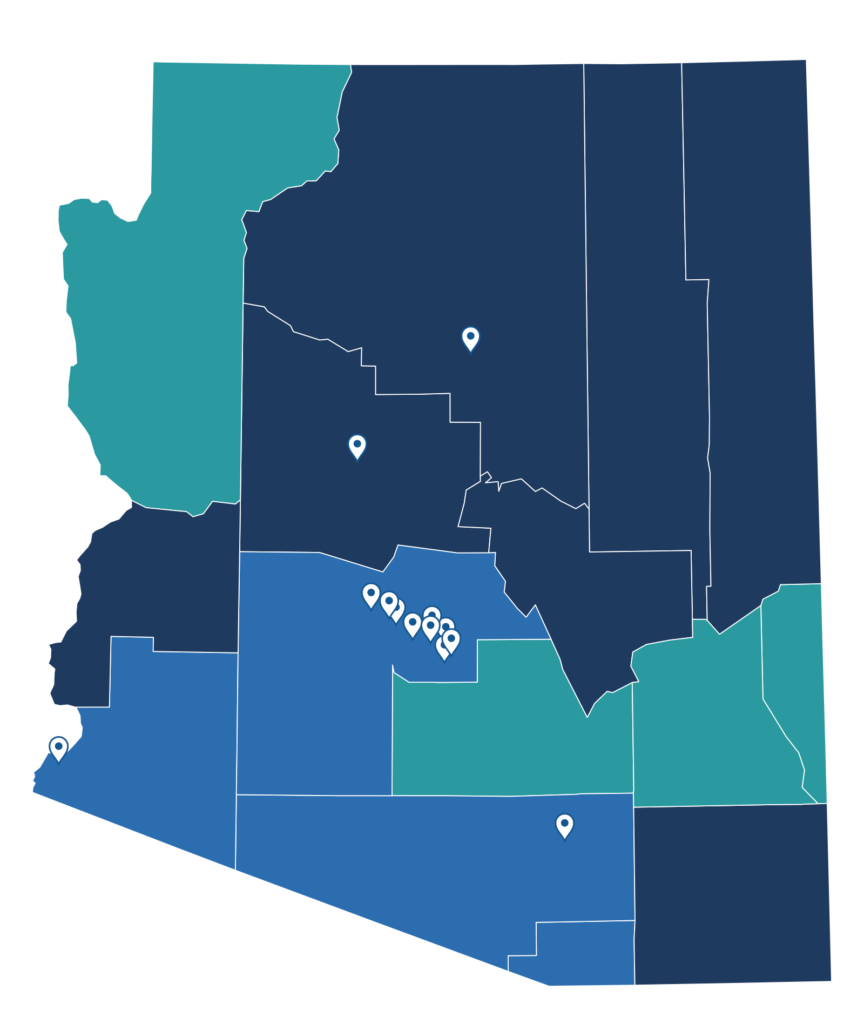
Medical Billing Support in Arizona’s Key Cities
Arizona medical practices serve patients across the Phoenix metropolitan area, southern Arizona, and communities throughout the state. Managing claims requires attention to payer-specific requirements, including AHCCCS fee-for-service and managed care billing procedures.
We help practices organize claim processing, denial management, payment reconciliation, and A/R follow-up according to their billing needs. Major cities in Arizona:
- Phoenix
- Tucson
- Mesa
- Glendale
- Scottsdale
- Chandler
- Gilbert
- Tempe
- Peoria
- Flagstaff
- Yuma
- Surprise
- Prescott

Optimize RCM Of Your Practice In Arizona With Expert Billing Team
Unresolved claims, recurring denials, and unexplained payment adjustments can make revenue harder to predict. A structured review can help identify which billing issues require attention and what steps the practice should take next. Our team can review your current concerns around claim submission, AHCCCS billing workflows, denial resolution, payment posting, and A/R recovery.
Tell us about your specialty, payer mix, and the billing problems your team wants to address.
Frequently Asked Questions (FAQs)
Does Medivantek handle AHCCCS billing?
Arizona providers need to distinguish AHCCCS fee-for-service billing from managed care billing. The applicable process depends on the member’s program, the service, and the entity responsible for processing the claim.
What should an Arizona practice check before submitting an AHCCCS claim?
AHCCCS publishes separate resources for fee-for-service billing and broader provider requirements. Providers should consult the manual and applicable program guidance rather than relying on a single generic Medicaid workflow.
How do you handle denied claims in Arizona?
A useful denial workflow begins with the payer’s stated reason. Depending on the circumstances, the next action may involve correcting claim information, submitting additional records, requesting reconsideration, or pursuing a formal dispute.
Can you help with prior authorization problems?
The billing workflow should connect authorization records with the claim before submission when possible. Our PA team can help track authorization-related issues and communicate the information needed from practice staff.
How should I evaluate an Arizona billing partner?
A billing partner should make the status of outstanding claims easier to understand. Before outsourcing, identify the tasks your practice needs help with and establish how the vendor will report its work.
Which Arizona cities do you serve?
Arizona medical practices serve patients across the Phoenix metropolitan area, southern Arizona, and communities throughout the state. We help practices organize claim processing, denial management, payment reconciliation, and A/R follow-up according to their billing needs.
